

A Comprehensive Evaluation in the Clinical Space
Solid Tumor Analysis
Solid tumors remain a major health concern with approximately 14 million new cases and 8.2 million cancer-related deaths per year. Currently multimodality treatment regimens are being explored to make advances against this deadly disease. Tumors are characterized by genomic instability and tailored therapies are being considered based on genetic profiling of cancers, driving precision medicine. This review outlines the various genetic changes present in solid tumors, evaluates the technologies currently used for identification of variants and compares the large panels available for clinical utility and comprehensiveness.

Cancers are currently among the leading cause of morbidity and mortality worldwide, resulting in approximately 14 million new cases and 8.2 million cancer-related deaths per year [1]. It is projected that by the year 2020 over 18 million Americans will either be cancer patients or cancer survivors [2]. While cancer is a term known to everyone, few understand the true meaning of the word. Cancer is a term given to numerous disease states caused by a combination of genetic mutations, leading to the abnormal growth of cells known as tumors. Tumors can be broken down into two major classifications, solid and non-solid. Non-solid tumors include cancers of the blood and lymph, such as leukemia. Solid-tumors are any abnormal mass of tissue that usually does not contain cysts or liquid areas including carcinomas, sarcomas, and lymphomas [3]. Solid tumor cancers account for the majority of cancer cases world-wide and are a main focus when it comes to new research. Currently the standard treatment procedures for solid tumor cancers include surgery, radiation therapy, and chemotherapy. All three of these generic treatment options work to target the molecular “symptoms” of tumor growth rather than the cause. While these methods have proven to be effective in some cases, surgery is an invasive procedure which poses its own risks to the patient and both chemotherapy and radiation are used for their ability to kill cells. Unfortunately, the cellular death that is instigated by these treatments is not limited to cancer cells. Due to the nature of these treatment approaches, they have the potential to do more harm than good to patients who may already be weakened from advanced disease states and prolonged treatment. Fortunately, technology that has been developing over the last 50 years has provided scientists the means to assess the molecular basis of a patient’s individual tumor, therefore allowing the development of treatments targeting the cause of the disease rather than just slowing tumor growth. Currently in the clinical field, there is a drive for the use of these technologies to provide customized treatment plans for patients based upon the genetic profile of their tumor. This type of individualized treatment is referred to as personalized medicine. By tailoring care and treatment to a person’s unique genetic makeup, doctors are able to provide more accurate diagnoses, safer drug prescriptions and more effective treatments for the many diseases and conditions that diminish health [4].
Genomics of Solid Tumors
In 1982 the first DNA mutation attributed to cancer progression was identified. This single missense mutation in codon 12 of HRAS gene was shown to be the cause of transformation in EJ and T24 bladder cancer cell lines [5]. This finding was just the first of many that were necessary to shape the picture of cancer genomics. Currently, the majority of DNA mutations that comprise the cancer genome occur in genes that fall into one of two categories, oncogenes and tumorsuppressor genes. Oncogenes code for proteins that are involved in perpetuating normal cell growth and tumorigenic mutations to these genes are typically gain of function mutations. Alternatively, tumor suppressor genes code for proteins that are normally involved in regulating cell growth and division and tumorigenic mutations to these genes are typically loss of function mutations. Both types of mutations can be identified as germline, meaning that a person was born with the mutation and therefore has a predisposition to cancer, or somatic, meaning the mutation was acquired through the evolution of cellular growth and division. A single tumor can contain a combination of these mutation types contributing to the complexity of cancer treatment.
The term oncogene refers to a group of genes that code for protein products that, in a healthy body, work to perpetuate normal cell growth and division. These protein products include transcription factors, chromatin remodelers, growth factors, growth factor receptors, signal transducers and apoptosis regulators. Unfortunately, there are many ways in which DNA can be damaged that mutates normal, necessary protein products into the initiators of tumorigenesis. When activating mutations occur in oncogenes it causes either a structural change in the protein product that increases its functionality or an increase in its expression level [6]. For example, in tumors manifesting in the brain or spinal cord known as gliomas, amplification or mutations leading to increased expression of growth factor or growth factor receptor genes such as PDGF, PDGFR, and EGFR are common. The excessive presence of these growth factors and receptors triggers the activation of the receptor tyrosine kinase (RTK) signaling pathways and subsequent activation of PI3K/AKT and RAS/MAPK signaling pathways causing unregulated cell growth [7]. Alternatively, there is a mutation to the EGFR gene causing increased functionality that is common to a number of other solid tumor types. This mutation consists of a deletion of the ligand-binding portion of the receptor which causes the receptor to be constitutively activated regardless of the presence of the ligand; this leads to the same unregulated cell growth that occurs when the receptor or ligand are overexpressed. Both mechanisms of EGFR activation have the ability to aid in the progression of cancer development. Another mechanism of oncogene activation occurs through translocations, chromosome abnormalities caused by rearrangement of parts between non-homologous chromosomes. In both Ewing’s sarcoma and prostate carcinomas, translocation events have been observed that create fusion genes whose protein products act as transcription factors. These transcription factors have an impact on the expression of genes involved with both cell proliferation and apoptosis [6]. While it is clear how significant mutations such as chromosomal translocations, gene amplifications and deletions would be sufficient to cause an activation of an oncogene, there are also activation events that occur from simple point mutations. As mentioned previously, point mutations in specific codons of RAS genes have been linked to bladder carcinomas, as well as lung, colon and pancreatic carcinomas [5,6]. These mutations cause the RAS protein product to send downstream signals for continuous cell growth. Activating point mutations in the BRAF gene can be found in the majority of melanomas, as well as a small percentage of colorectal cancers and hepatocellular carcinomas. These point mutations cause a structural change in the kinase domain in the BRAF protein making it constitutively active. When active, BRAF sends stimulating signals to the MAPK pathway which leads to the deregulation of genes involved in cell proliferation and survival [6].
Not unlike oncogenes, tumor suppressor genes play a necessary role in healthy cells, however their role is contradictory. While oncogenes are responsible for driving cell growth and proliferation, tumor suppressor genes are responsible for controlling irregular growth to prevent the initiation and growth of tumors. Tumor suppressor protein products are involved with triggering apoptosis, repairing DNA damage, inhibiting proliferation, regulating transcription, controlling the cell cycle and degrading excess transcription factors. These actions keep the protein products of oncogenes from causing abnormal cell growth and tumor formation. Oncogenic mutations to tumor suppressor genes are loss of function mutations which result in a decreased functionality or expression of the protein products. One of the most commonly mutated genes in human cancers is the tumor suppressor gene TP53 [8]. In healthy cells the protein product of TP53 is responsible for recognizing DNA damage, halting the cell cycle and initiating either DNA repair or apoptosis. Typically, oncogenic mutations to TP53 will result in a single amino acid change in the p53 protein. This missense mutation alters the structure of the protein and prevents it from functioning properly. The absence of a functional p53 protein not only allows for decreased regulation of cell growth and proliferation, but it also permits additional DNA mutations to accumulate in the cell, promoting further tumor progression [9]. Two additional tumor suppressor genes involved in cell cycle control are RB and CDKN2A (INK4). The protein products of both of these genes regulate the passage of cells through the G1 restriction point of the cell cycle. Without functional copies of either of these protein products, the cell can progress through this point uninhibited. Mutations to the RB gene were first identified in hereditary retinoblastoma and have since been identified in a variety of carcinomas including breast, bladder, and lung; mutations to the CDKN2A gene are seen frequently in lung cancer, prostate cancer, and melanoma [9]. Two additional tumor suppressor genes that do not play a role in controlling the cell cycle are BRCA1 and BRCA2. These genes are very well known for their association with hereditary breast cancer. Inheriting mutations in these genes significantly\ increases a woman’s risk of developing breast and/or ovarian cancer over her life time [10]. When functioning normally, the protein products of these genes work to repair DNA damage. Mutations leading to loss of function or expression of these genes contributes to genomic instability and, like mutations to TP53, allows for the accumulation of additional tumor promoting mutations [10].
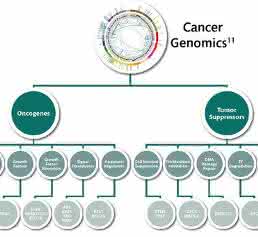
By looking at a small subset of the mutations involved in cancer genomics, it is abundantly clear that the process of cell growth and proliferation is extremely elaborate. This schema is depicted in more detail in ref. [11] (Figure 1). There is an immeasurable number of checks and balances in place in order to keep cells functioning properly and to eliminate those that are not. However, it only takes one small change in one gene in one of those pathways to have a severely detrimental effect This fact makes it necessary to have techniques available that are capable of accurately identifying those changes in order to give further insight on how to counteract the damage that they inflict on the body.
Advances in Somatic Detection Technologies
As previously discussed, tumorigenic somatic mutations acquired by the cell tend to occur more frequently in cellular signaling pathways rather than appear spontaneously throughout the genome [12]. Identification of these pathways is an important tool in the development of personalized therapeutic options. The over-all understanding of the impact these complex somatic changes have on cancer therapy is one of the major focuses in clinical and research oncology settings. Many efforts for genetic characterization are currently underway to help understand how these changes are related to tumor origins and its progression. The majority of mutation detection methods involve characterization of the most common form of genetic variations between individuals, known as single nucleotide polymorphisms (SNPs), which are often used as genetic biomarkers in worldwide disease association studies. Other genetic variations like point mutations, copy number variations (CNVs) and gene insertions or deletions are frequently used to assist with drug response prediction to a cancer therapy or complex phenotype.
In cases where a small number of SNPs need to be identified in a particular gene, low complexity detection assays such as probe melting analysis, real-time PCR (RT-PCR), allele specific or oligonucleotide ligation PCR and single base extension assays can be used [13]. Some techniques used for interpretation of a vast range of mutations present within a tumor are limited primarily by detection of SNPs.
RT-PCR based methods such as T-Plex RT-PCR, SYBR Green PCR and melting point analysis are becoming highly important in SNP discovery and profiling These techniques are commonly used due to their increased sensitivity, reproducibility, accuracy and high output abilities [14]. Table 1 summarizes and compares some of the most commonly used assays for variant detection available on the market.
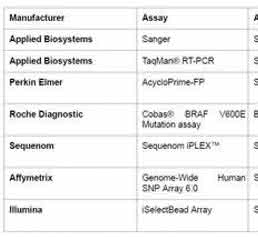
Applied Biosystems’ TaqMan® SNP assay is an example of differential hybridization, in which probes are designed to hybridize to a specific SNPs by introducing a different fluorophore for each SNP allele. During the amplification process, the specific fluorophore fluoresces allowing the specific SNP to be simply identified. Taqman® assays can also be used for the detection of gene fusions, CNVs, and several other genetic variants. Another fluorescence-based SNP detection technology is AcycloPrime-FP SNP detection, commercialized by PerkinElmer Life Science. This single-base extension technology is characterized by a simple workflow design based on three primers.
Two of the primers, with the help of a thermostable polymerase, are used in a PCR amplification process of extension by one base and incorporation one of the two fluorescent color-labeled nucleotide terminators to the third oligonucleotide primer. This third primer will have already hybridized to the upstream of target SNP sequence. The final step in SNP recognition is based on analysis of the fluorescent polarization intensity levels of detection, then used to determine which of the color-labeled terminators has been incorporated [15-19]. Another widely utilized method of somatic mutation detection is Sanger sequencing. This method has long since been the gold standard for the confirmation of somatic mutations due to extensively established accuracy. This semi-automated method has been classified as an essential, first-generation technology that enables sequencing and mapping of nucleic acid material. Moreover, this method unlocked the door for further scientific achievements, such as development of the chain terminating inhibitor method paired with fluorescence and capillary electrophoresis detection, which made sequencing of the human genome possible [16]. However, discovery of somatic mutations requires increased attention to the method design and advanced sensitivity levels of detection that most of these conventional sequencing technologies do not offer This is primarily caused by the fact that such mutations are more likely to occur in cancer cells, which exist within a high population of healthy cells. One of the limitations of the Sanger method is inability to detect somatic mutations within a mixture of the cancerous and normal cells [17]. In order to account for this difficulty an alternative multiplexed system, the Sequenom iPLEX™, was developed.
The Sequenom iPLEX™ assay demonstrates high analytical and quantitative performance during mutation screening. This assay runs on the MassARRAY® mass spectrometer system, utilizing a PCR-based single-base-extension method along with activity of 4 nucleotide terminators, profiling hundreds of somatic mutations in parallel. This method enables the processing of up to 40 samples in a single run, with possibility to increase the sample output to 160 daily [17]. Moreover, to increase availability and turnaround time of somatic mutation screening, the Sequenom company offers a highly effective multi-gene OncoCarta™ Panel comprised of 19 common oncogenes and 238 hotspots, which aim to detect genetic changes associated with cancer origin, pathways and progression from various specimen types including formalin fixed paraffin embedded (FFPE) tissues [17,18]. Obtained analysis can further support the evaluation of different therapies based on genetic makeup of each individual. In addition, by using the Sequenom TYPER™ Assay designer software for larger size genotyping, laboratories are able to design their own customized oncogene panels which can easily detect mutations of interest and identify genetic linkage between SNPs and specific diseases [18].
Another effective way to perform SNP genotyping is through the use of microarray assays, such as Affymetrix’s Genome-Wide Human SNP Array 6.0 and Illumina’s iSelectBead Array or High Density Human 1 M-Duo chip probes. Affymetrix arrays utilize differential hybridization melting temperatures to allow millions of SNPs to be scanned simultaneously in one sample, while Illumina’s microarrays employ a single-base extension method with a labeled base to call the SNPs [19]. These two arrays can also be utilized to perform CNV analysis. Additionally, Affymetrix offers the OncoScan FFPE solid tumor assay which delivers cost effective and powerful data on genome copy number, loss of heterozygosity and actionable somatic mutations within two days by using the whole genome scanning approach through molecular inversion probe technology [20].
In addition to the many research-based somatic mutation detection techniques already available, recent strides have been made to develop FDA approved testing methods. Roche Diagnostics released an automated FDA cleared RT-PCR system called the cobas® analyzer series. This instrument combines both clinical chemistry and immunoassay testing of biological samples in one platform. Roche offers a diverse list of diagnostic and research assays in various areas including virology, microbiology, blood screens, genomics and oncology. FDA approved tests include the cobas® EGFR test, which identifies 42 EGFR mutations in exons to further support diagnosis and treatment of non-small cell lung carcinomas, and the cobas® BRAF V600E Mutation assay, which delivers highly sensitive BRAF V600E mutation analysis in patients suffering from melanoma [21,22].
Unfortunately, due to several limitations of this variety of systems, such as high turnaround time and constant variant primer redesigns, new methodologies had to be developed to accommodate researchers and clinicians. In the early 21st century, several companies including Illumina Inc., ThermoFisher Scientific and Pacific Biosciences developed new next-generation sequencing (NGS) technologies that offer extremely efficient platforms. These instruments utilize various sequencing chemistries to generate broad genomic data of sequenced material within hours and at very low costs.
Next Generation Sequencing
Today, NGS technology has been frequently used in clinical and research settings, mostly focusing on identification of rare genetic variants in solid tumors and genetic diseases to aid in their prognosis and treatment. PCR-based target enrichment, where specific primer sets target hundreds of clinically actionable cancer gene sequences, as well as microarray based hybridization, are among the most commonly used DNA library preparation techniques in cancer genetics. Because of the high complexity of each tumor type, clinical diagnosis and choice of targeted therapies depend highly on NGS technologies and their ability to profile cancer-associated gene mutations and actionable variants in solid tumors quickly, effectively and with great sensitivity. Generated NGS data provides tremendous insight into the genetic make-up of cancerous cells, which allows for development of a specific personalized treatment or enrollment in a more appropriate clinical trial for each affected individual, helping to fight the disease more accurately with minimum side effects As we rapidly transition into an era of vast genomic data and personalized medicine, the need for new approaches in NGS sequencing technologies is also rapidly increasing. For example, whole exome sequencing, which examines all the expressed genes in a genome, has been developed for identification of genetic defects, single nucleotide variations (SNVs), SNPs or insertion and deletions within a single gene disorder. This method has also been used to explore numerous inherited diseases in order to acquire better understanding of the genetic disease mechanism of progression [23].
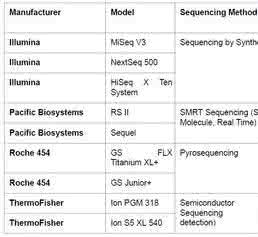
Next generation sequencing is centered on the idea of providing faster and more accurate data when compared to the gold standard of Sanger sequencing. The advances made with NGS have led to the development of sequencing platforms that greatly enhanced the possibility of performing all types of genomic analysis, from whole human genome sequencing to the detection of somatic mutations. Currently, there are several different companies that offer commercially available sequencing platforms. These platforms utilize different sequencing methods that result in significantly\ variable data outputs. Some of the most notable factors include overall sequencing output, maximum read length and number of reads, where a read refers to each nucleotide sequence. Table 2 summarizes and compares some of the most commonly used platforms available on the market.
One of the first NGS instruments to become commercially available was 454’s (Roche) GS FLX+ system, introduced in 2005. This platform uses emulsion PCR to amplify DNA fragments which are then sequenced utilizing pyrosequencing technology. Pyrosequencing uses the detection of pyrophosphate release upon nucleotide incorporation to discern the target sequence. This technology works by incorporating one nucleotide at a time so that only one may be incorporated on the template strand. When it gets incorporated the pyrophosphate group releases light letting one to discern the nucleotide sequence. In cases where multiple nucleotides are incorporated in a row, the intensity of the light fluoresces will dictate how many bases were added. 454’s technology allowed for sequencing of longer reads, reaching up to 1 Kb, compared to some of the other available platforms at that time [24,25].
Illumina is another prominent company that currently has five main sequencing systems available today. These instruments all utilize the same chemistry known as sequencing by synthesis, which uses bridge amplification to produce millions of copies of the DNA strand and then incorporates a different fluorescence signal for each of the four nucleotide bases, allowing for determination of which base is present in the DNA sequence. The entire sequencing set up occurs on individual flow cells where clusters of single template molecules are generated and grouped together. Unlike 454, Illumina’s sequencing technology incorporates all four nucleotides at a time and uses signal intensities during each sequencing cycle. Each of the nucleotides is terminator bound so that only one nucleotide incorporated during a cycle. The Illumina systems differ from each other mainly in terms of overall sequencing output and read length. For example, the newly released MiniSeq system can produce around 7.5 Gb of data in 24 hours; while the Illumina HiSeq X Series is capable of producing 1.8 Tb of data is less than 3 days [26].
In addition to Illumina and the sequencers manufactured by 454, Ion Torrent (Thermo-Fisher) offers two systems, the Ion PYM and Ion Proton, which are among the least expensive in the current market at roughly $50,000. For comparison The GAS FLAX+ and the Misses retail at $500,000 and $125,000 respectively [26,27]. Ion Torrent’s sequencing technology uses emulsion PCR and sequencing by synthesis but it measures the amount of H+ ions released during incorporation to distinguish the resulting nucleotide. This works by adding a single, specific nucleotide at a time; if the nucleotide is on the target sequence it will bind but will release a H+ion that is detected by an ion sensor. In cases where multiple nucleotides are added in a row, the signal intensity picked up by the ion detector will discern how many nucleotides were added.
All of the aforementioned platforms focus on generating a large amount of short reads for genomic analysis. Another company in the market, Pacific Biosciences, offers the PacBio RS II and Sequel System platforms, which focus on the generation of very long reads, near the upwards of 15 Kb, compared to that of the 600 bp sequencing capable on the MiSeq [25]. These systems also do not require the amplification of DNA but rather sequence single molecules in real-time (SMRT) by essentially taking a video of fluorescence incorporation and filtering out any background noise. SMRT utilizes zero-mode waveguides (ZMW) to allow for the world’s smallest light detection volume [25]. The target DNA molecule binds to the bottom of these ZMW’s and 4 differently fluorophore-labeled nucleotides get added to the molecule and are discerned by the wavelength of light produced.
Choosing the appropriate platform depends significantly on the type of sequencing application that is being performed. Factors such as data output or maximum read length can play a huge role. Some of the most common sequencing applications that are run on these platforms include whole genome sequencing, targeted sequencing and transcriptome sequencing. However, each sequencer offers its own particular applications that it performs better than others. For example, it would be more appropriate to perform a human whole genome sequencing project utilizing the HiSeq X Ten System or the Sequel System than to use the Ion PGM. In contrast, the use of the Ion Proton is more appropriate to use than the GS FLX+ when looking at RNA profiling Other applications may not be as sequencer dependent as others. One such application that most of the sequencers perform very well at is targeted sequencing.
Targeted sequencing, sometimes known as targeted enrichment, focuses on sequencing a captured region of interest. An example of this could be looking at a particular disease, such as cystic fibrosis where researchers may design a targeted panel to only look at the CTFR gene for genetic variation. This specific targeting can be accomplished using methods such as amplification-based enrichment or probe-based capture enrichment methods. There are many advantages to the utilization of targeted sequencing that this method allows one to focus entirely on the specific regions of interest, instead of looking at the entire genome. This can decrease overall sequencing costs by optimizing the capacity of the sequencer and will lead to clearer, more focused data generation of the captured libraries. This is especially helpful when attempting to detect somatic tumor mutations because it allows for deeper sequencing to capture lower allelic frequencies.
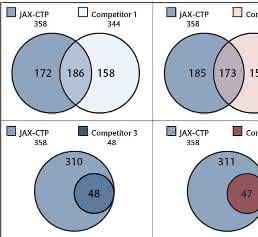
In the clinical space, many companies have utilized targeted sequencing to offer panels profiling somatic tumors. There are some companies, such as Illumina, that offer commercially available off-the shelf solid tumor panels which laboratories can purchase and run independently. One example of such a product is the Illumina TruSight Cancer panel, which targets 94 genes associated with cancer. Taking Illumina’s idea one step further, other companies have designed their own custom targeted panels which can then be developed as clinical tests to be offered to physicians. As an example, the Jackson Laboratory for Genomic Medicine offers a custom targeted sequencing panel, the JAX Cancer Treatment Profile TM (JAX-CTPTM), which analyses 358 cancer-associated genes in a diverse subset of cancer types [24]. Accompanying the 358 gene panel, a targeted fusion detection assay is incorporated to detect gene fusions in 53 genes linked to solid tumors. Figure 2 depicts a direct comparison of the JAX-CTPTM custom targeted panel with four other competitor companies offering similar tests.
The clear benefit in creating a custom targeted gene panel, especially in the case of solid tumors, is that the genes included are of significance due to their clinical utility and actionability. The JAX-CTPTM panel was designed specifically to target genes and variants that are considered clinically actionable and useful for the physician and patient.
This includes genes that have known drug targets, standard oncogenes and tumor suppressor genes, as well as genes that JAX researchers identified as future targets for therapies. The goal of running this targeted panel is to generate clinically relevant information to report back to physicians. This information can come in multiple forms, including treatment indications and contraindications, active clinical trials and predicted clinical outcomes. Furthermore, these pieces of information often need to be looked at in parallel in order to generate the most beneficial information for the patient. For example, patients with colorectal tumors expressing the epidermal growth factor receptor (EGFR) are found to respond very well to the drug Cetuximab. However, tumors expressing EGFR that also have mutations in the KRAS gene show no noticeable improvement when treated with this therapy [25]. This case of contraindication negating the original indication shows just how important it is to generate the complete picture regarding the actionable targets within a patient’s tumor. The clinical report provided to physicians who order JAX-CTPTM includes mutation-specific therapy options and clinical trials, as well as any variants of unknown significance that have the potential to be clinically relevant. With the great strides being made daily in cancer research, the list of mutations that are deemed actionable is expanding rapidly. This fact makes it exceedingly important to be continually re-assessing the content of solid tumor panels marketed for their clinical utility in order to remain relevant in the field of cancer precision medicine. While the current deliverables provided by solid tumor panel sequencing are beneficial the increased government focus on cancer initiatives should bring about significant changes in the field in the coming years.
Future of Solid Tumor Panels
As the use of targeted cancer panels advances, there are constantly new ways to improve the efficacy of existing assays. One concept that has become a principal in solid tumor NGS cancer assays is the model of running tumor/normal pairs. The tumor/normal workflow involves extracting DNA from both patient tumor tissue and normal cells and processing them simultaneously through the assay. The normal cells are collected through a noninvasive process such as a blood draw, as to not introduce any additional negative impact on the patient. The purpose of this type of testing is to provide a clear understanding of which mutations in the tumor are somatic and which are germline. This designation between mutation types is important because targeted cancer therapies are suggested based on their ability to impact only the cancer cells. If the mutation that is used to select the therapy is in fact a germline mutation, than the treatment will impact all of the patient’s cells and potentially be detrimental to the patient’s health.
Currently, laboratories that perform NGS solid tumor panel assays without testing tumor/normal pairs use a bioinformatics pipeline with set allele frequencies for mutations to filter out germline mutations. While this is a clinically accepted method, many scientists in the field find that it is prone to error and that tumor/normal testing should be the gold standard for any clinical assay [26].
As the push for tumor/normal testing continues, there has also been a drive to implement non-invasive ways to assess the patient’s tumor through liquid biopsy testing. Traditionally when looking at solid tumors, the patient would undergo surgery to obtain a tumor biopsy that would then be subjected to molecular profiling The liquid biopsy approach provides an alternative method to detect somatic mutations by utilizing the circulating tumor DNA (ctDNA) present in a patient’s plasma. The use of a liquid biopsy assay offers access to both a tumor and normal specimen from a single non-invasive blood draw. Liquid biopsies also present the option of monitoring treatments in real-time to any evidence of resistance mutations or a new mutation that responds to a specific targeted therapy. These assays can be performed via NGS technologies, as well as newly developed methods such as digital droplet PCR.
Based on the objectives behind the implementation of tumor/ normal testing and liquid biopsy testing, it is clear that somatic mutations are a major focus in the realm of solid tumors. However, germline mutations can also provide incredibly useful information in regards to a patient’s inherited risk factors for cancer. Recently, there has been a rise in the offering of germline solid tumor panels, such as the Germ-line Tumor Syndromes panel from the Center for Genomics and Transciptomics and the CancerNext panel at Ambry Genetics [27,28]. These panels are focused on hereditary forms of breast, ovarian, colorectal and uterine cancers as well as other cancer types that are known to have inherited risk factors. The purpose of these germline panels is two-fold. First, these assays can be used in patients who are already suffering from cancer to determine which tumorigenic mutations, if any, were inherited. An example of this is the association with loss of imprinting and tumorigenesis. Genomic imprinting refers to mono-allelic expression of certain genes according to their parent-of-origin. Expression of imprinted genes is directly regulated by the DNA methylation present at imprinted control regions (ICRs) [29]. As mis-regulation of imprinted genes leads to many malignant carcinomas, identification of the mutations involved in the factors associated with maintenance of genomic imprinting might be a novel direction for the early diagnosis of malignant tumors [30-32]. These factors include DNA methyltransferases and other epigenetic modifiers such as histone methyltransferases G9a and its partner GLP [33,34]. The determination of inheritance provides information about the potential risks factors within a family and may impact pre-emptive decisions made by other members of the patient’s immediate family [35,36]. The other purpose of these assays would be to assess the risk factors of a healthy person who has a family history of potentially inheritable cancers prior to tumor development. Overall, these germline assays have the potential to contribute greatly to the future of cancer treatment and diagnostics by providing a method of early detection and possible even prevention of cancer development [37-39].
Conclusion
As is the nature of science, the field of solid tumor profiling and somatic mutation detection is constantly changing and advancing, with new technologies and methodologies appearing every year. Great strides have been made, even over the past ten years, in the areas of DNA sequencing and cancer treatment. By using next-generation sequencing assays like JAX-CTPTM, physicians can be provided with patient specific profiles that can be used to determine targeted therapies which can increase the standard of care for cancer patients. Additionally, the minimal cost and turnaround time for these types of assays add to their overall value compared to other less common methods. By continuing work with next-generation sequencing testing and establishing stronger clinical utility, the idea of precision medicine can become a reality, not only for cancer-related diseases, but for any somatic or germline condition. Risks and susceptibility can be determined as early as in-utero to allow physicians and patients to be on the best defense for almost any life-threatening disease. Drug-treatment options can be tested for efficacy by producing next-generation sequencing data for clinical trials or drug research studies in order to establish more effective treatments. This personalized medicine approach is truly the future of patient care and it is clear that we have barely scratched the surface of the capabilities available as the field only continues to progress and new technologies and options are developed.
© 2016 Kelly K, et al. This is an open-access article distributed under the terms of the Creative Commons Attribution License, which permits unrestricted use, distribution, and reproduction in any medium, provided the original author and source are credited.Citation: Kelly K, Ras A, Helm S, Spotlow V, Reddi HV (2016) A Comprehensive Evaluation of Solid Tumor Analysis in the Clinical Space. Next Generat Sequenc & Applic 3: 129. doi:10.4172/2469-9853.1000129
Kevin Kelly
Aleksandra Ras
Samantha Helm
Vanessa Spotlow
Honey V Reddi*
Clinical Genomics Laboratory
The Jackson Laboratory for Genomic Medicine
Farmington, CT, 06032, USA
Corresponding author:
Honey V Reddi
Email: [email protected]
References
[1] Stewart BW, Wild CP (Eds) (2014) World Cancer Report 2014. Lyon, France: International Agency for Research on Cancer.
[2] Butcher L (2008) Solid Tumors: Prevalence, Economics, and Implications for Payers and Purchasers. Biotechnol Healthc 5: 20-21.
[3] Gavhane YN, Shete AS, Bhagat AK, Shinde VR, Bhong KK, et al. (2011) Solid Tumors: Facts, Challenges and Solutions. Int J Phar Sci Res 2: 1-12.
[4] The Jackson Laboratory (2016) What is personalized medicine? [https:// www.jax.org/genetics-and-healthcare/personalized-medicine/what-ispersonalized- medicine] Accessed on: July 20, 2016.
[5] Der AD (2010) Ras history. The Saga Continues. Small GTPases 1: 2-27.
[6] Croce CM (2008) Oncogenes and Cancer. N Engl J Med 358: 502-511.
[7] Nazarenko I, Hede SM, He X, Hedrén A, Thompson J, et al. (2012) PDGF and PDGF receptors in glioma. Ups J Med Sci 117: 99-112.
[8] US National Library of medicine (2016) TP53 [https://ghr.nlm.nih.gov/gene/TP53#conditions] Accessed on: July 20, 2016.
[9] Cooper GM (2000) Tumor Suppressor Genes. In GM Cooper, The Cell: A Molecular Approach. 2nd edition. Sunderland MA: Sinauer Associates.
[10] National Cancer Institute (2016) BRCA1 & BRCA2: Cancer Risk & Genetic Testing [http://www.cancer.gov/about-cancer/causes-prevention/ genetics/brca-fact-sheet#q1] Accessed on: July 20, 2016.
[11] Genomics Institute (2016) Cancer Genomics [https://genomics.soe.ucsc.edu/cancer] Accessed on: July 20, 2016.
[12] Soto A, Sonnenschein C (2004) The somatic mutation theory of cancer: growing problems with the paradigm? Bioessays 26: 1097-1107.
[13] Koch A (2010) Nature Reviews. Technology platforms for pharmacogenomics diagnostic assays.
[14] Baris I, Etlik O, Koksal V, Ocak Z, Baris ST (2013) SYBR green dye-based probe-free SNP genotyping: Introduction of T-Plex real-time PCR assay. Analytical Biochemistry 441: 225-231.
[15] Greene RA, DiMeo JJ, Malone ME, Swartwout S, Liu J, et al. (2016) A novel method for SNP analysis using fluorescence polarization.
[16] Sanger F, Air GM, Barrell BG, Brown NL, Coulson AR , et al. (1977) Nucleotide sequence of bacteriophage phX174DNA. Nature 265: 687-695.
[17] Pearce M, Ehrich M (2010) Somatic Mutation Analysis in Tumor Samples using the Sequenom MassARRAY® System.
[18] OncoCarta Panel v1.0 (2015) The Science of Rapid Mutation Screening [http://agenabio.com/wp-content/uploads/2015/05/51-20010R2.0- OncoCarta-Panel-v1.0-Flyer_WEB.pdf] Accessed on: July 20, 2016.
[19] Perkel J (2008) SNP genotyping: six technologies that keyed a revolution. Nature methods 5: 447-453.
[20] Affymetrix (2016) OncoScan FFPE Assay Kit Brochure. [http://www.filgen.jp/Product/Bioscience/Expression&CGH/oncoscan_ffpe_assay_kit_brochure.pdf] Accessed on: July 20, 2016.
[21] PR Newswire (2015) Roche receives fda approval for cobas egfr mutation test v2 as a companion diagnostic for non-small cell lung cancer therapies [http://www.prnewswire.com/news-releases/roche-receives-fdaapproval- for-cobas-egfr-mutation-test-v2-as-a-companion-diagnosticfor- non-small-cell-lung-cancer-therapies-300178438.html] Accessed on: July 20, 2016.
[22] Curry JL, Torres-Cabala CA, Tetzlaff MT, Bowman C, Prieto VG (2012) Molecular platforms utilized to detect BRAF V600E mutation in melanoma. Semin Cutan Med Surg 3: 267-273.
[23] Robinson PN, Krawitz P, Mundlos S (2011) Strategies for exome and genome sequence data analysis in disease-gene discovery projects. Clin Genet 80: 127-132.
[24. Ananda G, Mockus S, Lundquist M, Spotlow V, Simons A, et al. (2015) Development and validation of the JAX Cancer Treatment Profile for detection of clinically actionable mutations in solid tumors. Exp Mol Pathol 98: 106-112.
[25] Karapetis CS, Khambata-Ford S, Jonker DJ, O‘Callaghan CJ, Tu D, et al. (2008) K-ras Mutations and Benefit from Cetuximab in Advanced Colorectal Cancer. N Engl J Med 359: 1757-1765.
[26] Gray PN, Dunlop CL, Elliott AM (2015) Not All Next Generation Sequencing Diagnostics are Created Equal: Understanding the Nuances of Solid Tumor Assay Design for Somatic Mutation Detection. Cancers 7: 1313-1332.
[27] Transfering Code to Diagnosis (2016) Tumor Diagnostics [http:// www.cegat.de/en/diagnostics/tumor-diagnostics/]. Accessed on: July 20, 2016.
[28] Ambry Genetics (2016) CancerNext. [http://www.ambrygen.com/tests/cancernext]. Accessed on: July 20, 2016.
[29] Li E, Beard C, Jaenisch R (1993) Role for DNA methylation in genomic imprinting. Nature 366: 362-365.
[30] Cui H, Cruz-Correa M, Giardiello FM, Hutcheon DF, Kafonek DR, et al. (2003) Loss of IGF2 imprinting: a potential marker of colorectal cancer risk. Science 299: 1753-1755.
[31] Chen RZ, Pettersson U, Beard C, Jackson-Grusby L, Jaenisch R (1998) DNA hypomethylation leads to elevated mutation rates. Nature 395: 89-93.
[32] Ogawa O, Eccles MR , Szeto J , McNoe LA , Yun K, et al. (1993) Relaxation of insulin-like growth factor II gene imprinting implicated in Wilms‘ tumour. Nature 362: 749-751.
[33] Li E, Bestor TH, Jaenisch R (1992) Targeted mutation of the DNA methyltransferase gene results in embryonic lethality. Cell 69: 915-926.
[34] Zhang T, Termanis A, Özkan B, Bao XX, Culley J, et al. (2016) G9a/GLP Complex Maintains Imprinted DNA Methylation in Embryonic Stem Cells. Cell Rep 15: 77-85.
[35] All Seq (2016) Pacific Biosciences [http://allseq.com/knowledge-bank/ sequencing-platforms/pacific-biosciences/] Accessed on: July 20, 2016.
[36] Illumina (2016) Sequencing power for every scale. [http://www.illumina.com/systems/sequencing.html] Accessed on: July 20, 2016.
[37] Thermo Fisher (2016) Ion Proton™ System for Next-Generation Sequencing.[https://www.thermofisher.com/us/en/home/life-science/sequencing/next-generation-sequencing/ion-torrent-next-generationsequencing-workflow/ion-torrent-next-generation-sequencing-runsequence/ion-proton-system-for-next-generation-sequencing.html] Accessed on: July 20, 2016.
[38] Thermo Fisher (2016) Ion PGM™ System for Next-Generation Sequencing [https://www.thermofisher.com/us/en/home/life-science/ sequencing/next-generation-sequencing/ion-torrent-next-generationsequencing-workflow/ion-torrent-next-generation-sequencing-runsequence/ ion-pgm-system-for-next-generation-sequencing.html] Accessed on: July 20, 2016.
[39] All Seq (2016) 454 (Roche) [http://allseq.com/knowledge-bank/ sequencing-platforms/454-roche/] Accessed on: July 20, 2016.


Das könnte Sie auch interessieren
Auf Basis nachwachsender Rohstoffe
Biobasierte PCR-Platten
Eppendorf bietet PCR-Platten, die aus Polypropylen auf Basis nachwachsender Rohstoffe, sog. biobasierten Materials aus pflanzlichen Rohstoffen der zweiten Generation, bestehen.
 mehr...
Wasserqualität mit DNA- und RNA-Analysen prüfen
Eine Auswertung von mehr als 1100 Publikationen der letzten 30 Jahre belegt den erfolgreichen Einsatz von DNA/RNA-Analytik zur Realisierung wissenschaftlicher Studien über hygienische Wasserqualität und -sicherheit anhand mikrobiologischer...
mehr...Produkt des Jahres 2024 in der Kategorie...
PCR-Thermocycler
Die meisten Leserstimmen aller nominierten Produkte in der Kategorie Life Sciences bekam der PCR-Thermocycler qTOWER iris von Analytik Jena.
mehr...Quantifizierung der lebenden Bakterien im...
Mikrobiologische Wasseranalytik mit qPCR
Der Autor dieses Artikels stellt ein Verfahren vor, das qPCR so steuern kann, dass ausschließlich Genfragmente in einer Abwasserprobe erkannt werden, die von lebenden Bakterien stammen.
mehr...PCR-Thermocycler
Der "Mastercycler® X40" von Eppendorf ist ein PCR-Thermocycler mit intuitiver Benutzeroberfläche. Der Griff kann mit einer Hand bedient werden, und ein Sicherheitsdeckel passt sich vom Druck her automatisch an.
mehr...Studie zur Wirkung von Süßstoffen
Menschliche Immunzellen reagieren auf Süßstoffe
Diätgetränke enthalten oft einen Mix aus Süßstoffen, die nach dem Konsum auch ins Blut gelangen. Wie eine Studie zeigt, genügen bereits verzehrübliche Aufnahmemengen von Saccharin, Acesulfam-K und Cyclamat, um in weißen Blutkörperchen die Ableserate...
mehr...Molekulare Labordiagnostik der Zukunft
Hohe Zuverlässigkeit, optimale Nutzerfreundlichkeit, schnelle Resultate:Vivalytic Produkte überzeugen auf ganzer Linie.
mehr...COVID-19-assoziierte Antigene und...
Nanobiosensor zum Antikörper-Nachweis entwickelt
Forschende am Helmholtz-Zentrum Dresden-Rossendorf (HZDR) haben einen auf Goldnanodrähten basierenden Nanobiosensor entwickelt, mit dem COVID-19-assoziierte Antigene und Antikörper nachgewiesen werden können.
mehr...PCR-Thermocycler
In einer Übersicht stellen Anbieter zahlreiche PCR-Thermocycler mit wesentlichen technischen Daten vor.
mehr...